Series release notes3 min read
A release date in an entertainment headline is not always midnight where you live. Before arranging a shared first episode, distinguish a calendar date from the platform’s stated launch time. This small reading exercise prevents a predictable mismatch from becoming a rumor that the show has been delayed.
Read the guide ↗
Series release notes3 min read
Seeing only part of a season can mean several different things. Before concluding that episodes disappeared, read how the series is being released: weekly, in small batches or in separate parts. The distinction changes both your viewing plan and the accuracy of any update you share with friends.
Read the guide ↗
Series release notes3 min read
The first season shown by an app is not always the first season produced. For series with independent seasons, a platform may emphasize the latest installment. Decide whether you want release order, a particular self-contained season or another officially supported order before allowing the interface to make that choice for you.
Read the guide ↗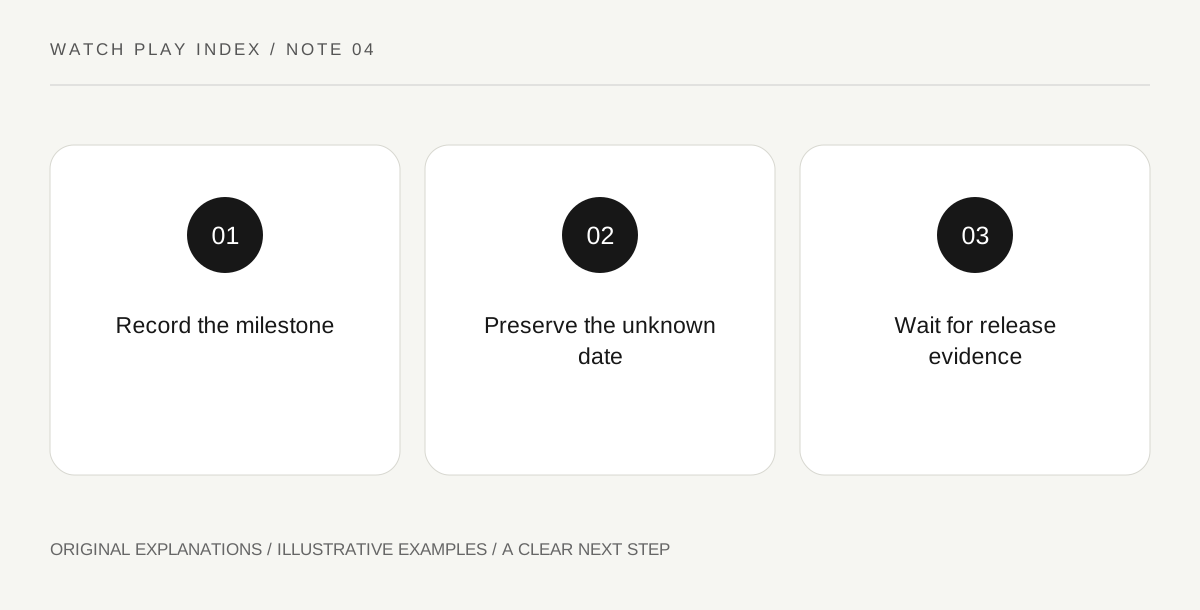
Reading screen news3 min read
A production headline can be exciting without telling you when a season will be watchable. The dated official Wednesday Season 3 report provides a useful reading exercise: distinguish the milestone it confirms from the release information it does not announce. Keep those two ideas separate when summarizing entertainment news.
Read the guide ↗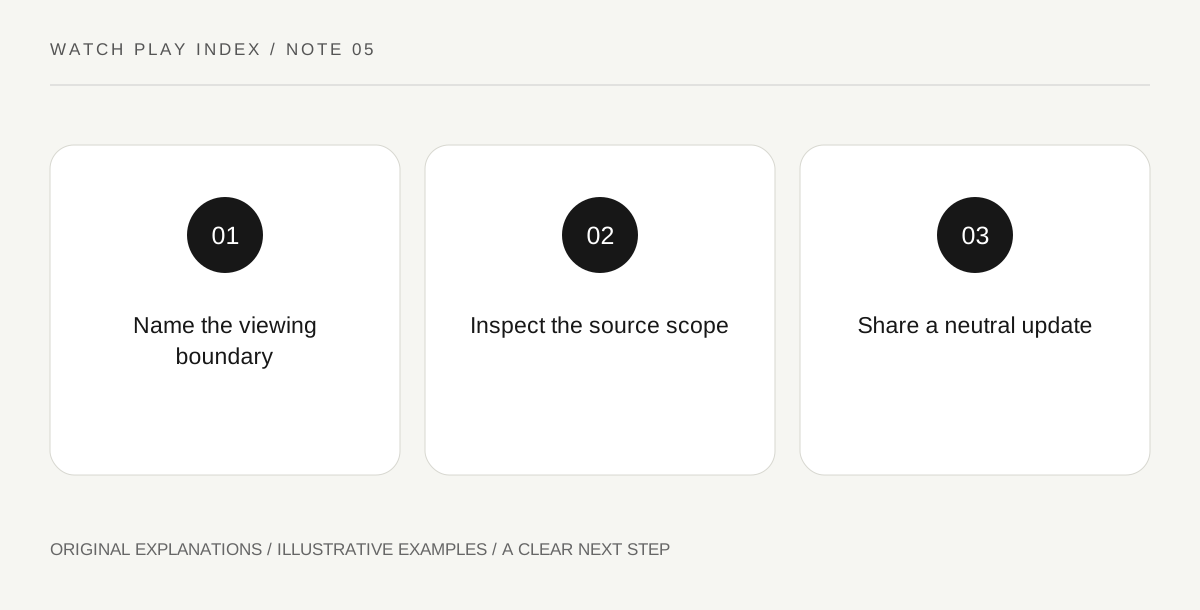
Reading screen news3 min read
An official source can be reliable about production while also discussing a previous finale. Reliability and spoiler suitability answer different questions. Before sharing a series-news page with someone still watching, inspect its sections and decide whether the recipient can read it without crossing their own viewing boundary.
Read the guide ↗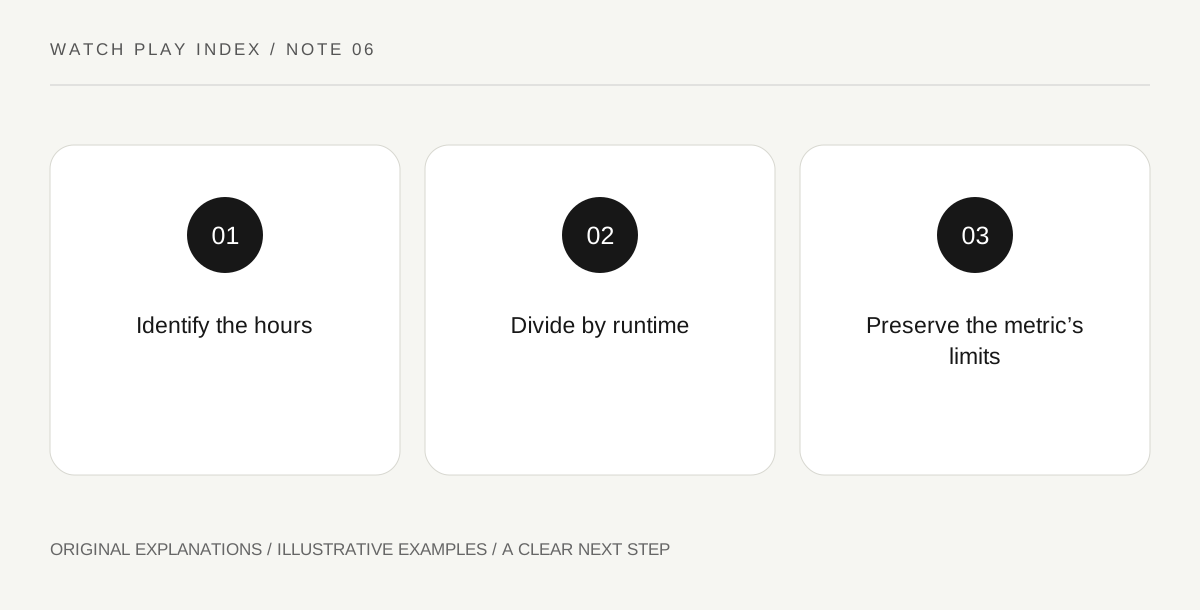
Reading screen news3 min read
A headline about millions of views can sound like a count of individual people who finished a title. Netflix defines its reported views through a different calculation: viewing hours divided by runtime. Work through a small invented example to understand what that metric can tell you and what it cannot establish.
Read the guide ↗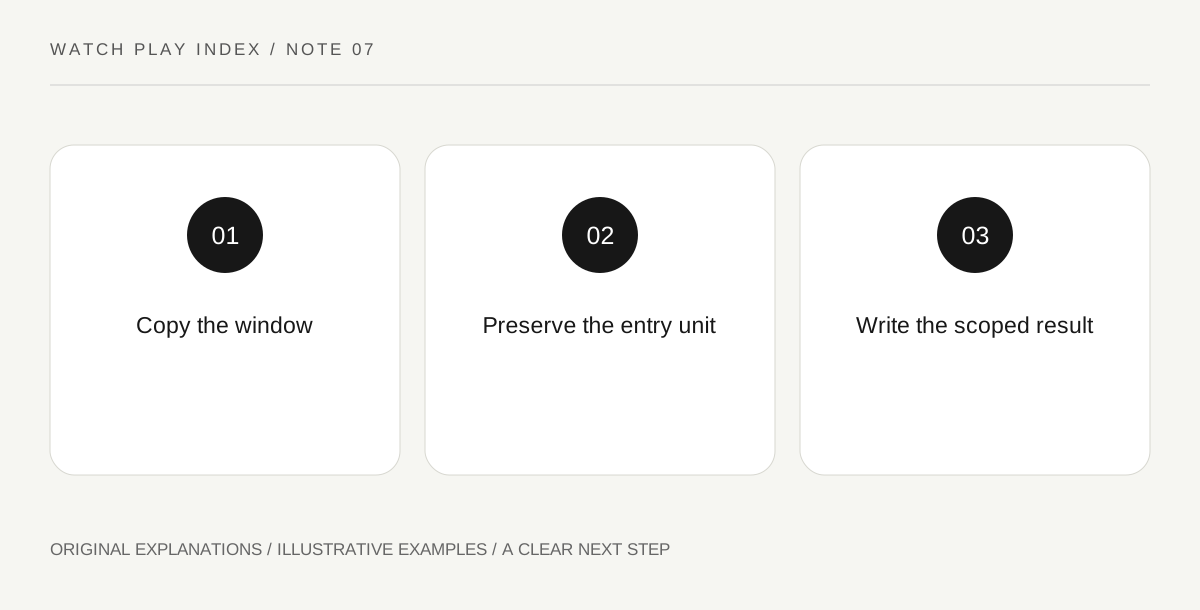
Reading screen news3 min read
Two ranking headlines can both be accurate while describing different periods. A weekly chart concerns a defined week; Netflix’s most-popular lists use a first 91-day window. Read the time frame before comparing positions, or a title’s absence from one list can appear to contradict its presence on another.
Read the guide ↗
Series release notes3 min read
Two people can open the same live event and still be watching different moments. Pausing, rewinding or starting from the beginning creates a playback position distinct from the live edge. Make that distinction before discussing what is happening, especially when friends want to react together without spoiling a delayed viewer.
Read the guide ↗
Reading screen news3 min read
A chapter title can make a long video conversation easier to navigate, but a short segment does not automatically carry everything that qualifies its claim. Use the chapter as a starting point, then inspect the surrounding discussion before quoting or sharing the speaker’s conclusion as entertainment news.
Read the guide ↗
Game update reports3 min read
A game-update headline is useful only when you understand which version it describes. Before changing a strategy or reporting that a feature has arrived, match the patch note to the actual build, platform and branch. This creates a small evidence trail instead of a collection of disconnected update headlines.
Read the guide ↗
Game update reports3 min read
An exciting feature can be publicly discussed before it reaches a game’s default version. When a report concerns a beta branch, keep that branch in the sentence. Understanding the distinction lets you follow development news without assuming every screenshot describes the game currently delivered to ordinary installations.
Read the guide ↗
Game update reports3 min read
A playtest announcement can invite interest without immediately admitting every applicant. Read the difference between requesting access, receiving access and finding the test playable. These states help you understand a development update and prevent a signup button from becoming an unsupported promise about tonight’s gaming session.
Read the guide ↗
Game update reports3 min read
A roadmap can explain a developer’s direction without guaranteeing a particular future game. When reading Early Access news, distinguish what the current build already offers from what the team hopes to add. The two-column habit makes progress understandable without turning every attractive plan into a completed feature.
Read the guide ↗
Game discovery evidence3 min read
A game can have different recent and overall review summaries because the groups of reviews cover different periods. Read the time window before treating the two labels as a contradiction. Then inspect the reasons relevant to your interests, rather than letting either summary stand in for an explanation.
Read the guide ↗
Game discovery evidence3 min read
A festival page can be a useful way to browse a mechanic without being a list of the best games. Read what unites the event before interpreting participation as an award. Then describe the action you want to do in a game, so that the event’s theme becomes a starting point for discovery.
Read the guide ↗
Game discovery evidence3 min read
A cinematic trailer, a gameplay clip and a developer diary can all be informative while answering different questions. Read the video’s category before using it as evidence about the playing experience. This makes it easier to appreciate the presentation without assuming every attractive image shows an action you can perform.
Read the guide ↗
Game discovery evidence3 min read
A hardware-compatibility badge can summarize useful review information, but the details explain what the category means for you. Read the badge with its actual device and qualification notes. That keeps a quick discovery aid from becoming an unsupported promise about every setting, accessory or personal playing requirement.
Read the guide ↗
Game discovery evidence3 min read
A video playing inside a store broadcast is not automatically an unscripted demonstration happening at that instant. Steam supports live and prerecorded broadcast content. Read the presentation context before treating a smooth sequence, a chat window or a live tag as proof of a particular kind of production.
Read the guide ↗
Game update reports3 min read
Community-content news can describe a proposal, a downloadable modification or an item selected for a game. Those are different states. Read the Workshop model and the item’s actual status before sharing a creation as though it has become an official feature available to every player.
Read the guide ↗
Game discovery evidence3 min read
A festival preview is most useful when it leaves you with a clear question about the eventual game. Steam Next Fest centers on upcoming games with playable demos. Treat the event as a discovery moment, then keep preview observations distinct from claims about a release that may still change.
Read the guide ↗