An official series-news page can still contain spoilers
An official source can be reliable about production while also discussing a previous finale. Reliability and spoiler suitability answer different questions. Before sharing a series-news page with someone still watching, inspect its sections and decide whether the recipient can read it without crossing their own viewing boundary.
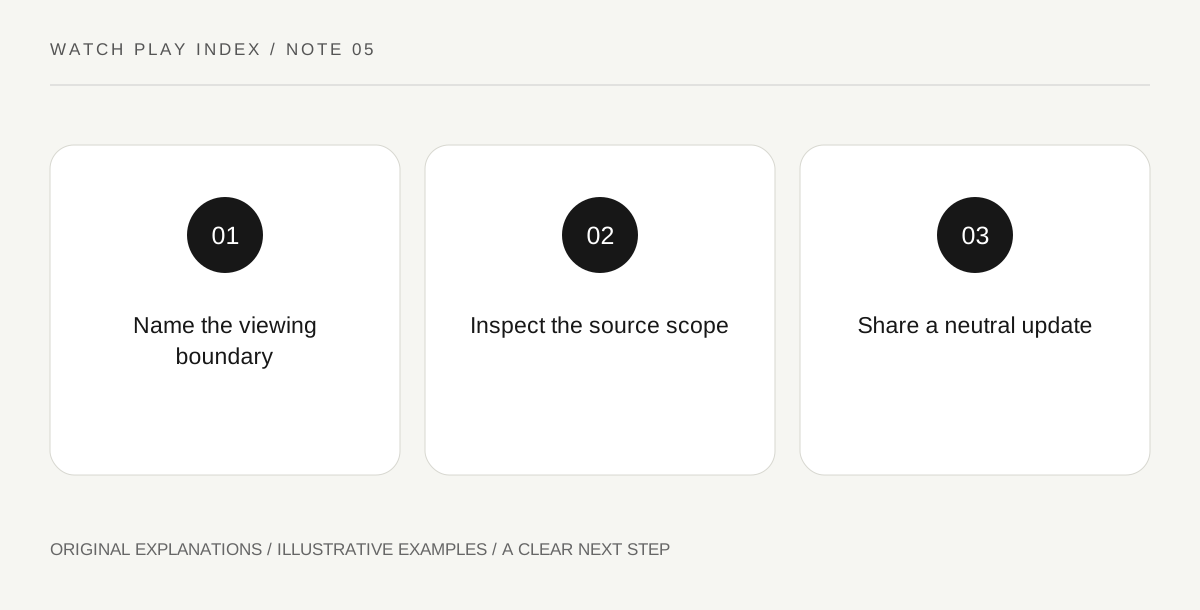
Original explanatory diagram. Read the full method and limitations below.
Set a specific boundary
Ask which season and episode the recipient has completed. Avoid a vague statement that someone is mostly caught up. A production report may refer casually to earlier endings even when its headline focuses on a future season. The official Wednesday Season 3 information page, for example, includes a heading discussing the Season 2 ending. That structure is enough to show why a source can be useful for reporting and still be unsuitable to open unprepared.
Separate the fact from the link destination
If the only information you need to share is a production milestone, summarize that supported fact in your own words and warn that the linked full report includes earlier-season discussion. Do not copy a long excerpt or include a revealing image to explain the warning. The recipient can choose whether to open the source. A careful summary preserves verification without forcing every reader through material they did not ask to see.
Avoid the revealing warning
A spoiler warning should identify the boundary, such as discussion through a named season’s finale, without stating what happens there. A warning that names a surprise event has already defeated its purpose. Keep the title of your own note neutral as well. In a group chat, put the boundary before any optional detail and respect members who decide to wait. People can enjoy the same series at different paces without needing to justify their schedule.
Keep discussion layers distinct
Use one space or message for release and production facts, another clearly marked space for plot discussion and a third for predictions if the group wants them. These are conversational choices, not special platform features. The separation makes it easier to evaluate a rumor too: a fan theory should not become an apparently confirmed production fact simply because it appears beside an official link. Always preserve who said what and the status of the claim when moving information between layers.
An illustrative reader exercise
In an invented viewing group, one person has finished Season 2 and another is halfway through it. They share a neutral production update with a note that the full official report discusses the Season 2 ending. The second viewer chooses not to open it yet. Plot conversation remains in a separate agreed message. The example describes spoiler-aware sharing and deliberately includes no storyline details.
Questions that come up
Does an official source qualify automatically as spoiler free?
No. Officiality supports attribution, not the reader’s desired spoiler boundary. Inspect the actual page sections, imagery and discussion scope before recommending that someone open the full report.
Can a warning itself spoil the story?
Yes. Identify the episode or season boundary without revealing the event. Neutral wording gives the recipient a meaningful choice and keeps the warning from becoming the first disclosure.
References and scope
These sources support the factual background. Examples and exercises are original illustrative teaching material. References do not imply endorsement.
- Netflix Tudum — Wednesday Season 3 production report — Dated September 30,2026 report distinguishes wrapped production from an announced release date; page includes previous-season discussion.