A partial season may be a release design rather than missing episodes
Seeing only part of a season can mean several different things. Before concluding that episodes disappeared, read how the series is being released: weekly, in small batches or in separate parts. The distinction changes both your viewing plan and the accuracy of any update you share with friends.
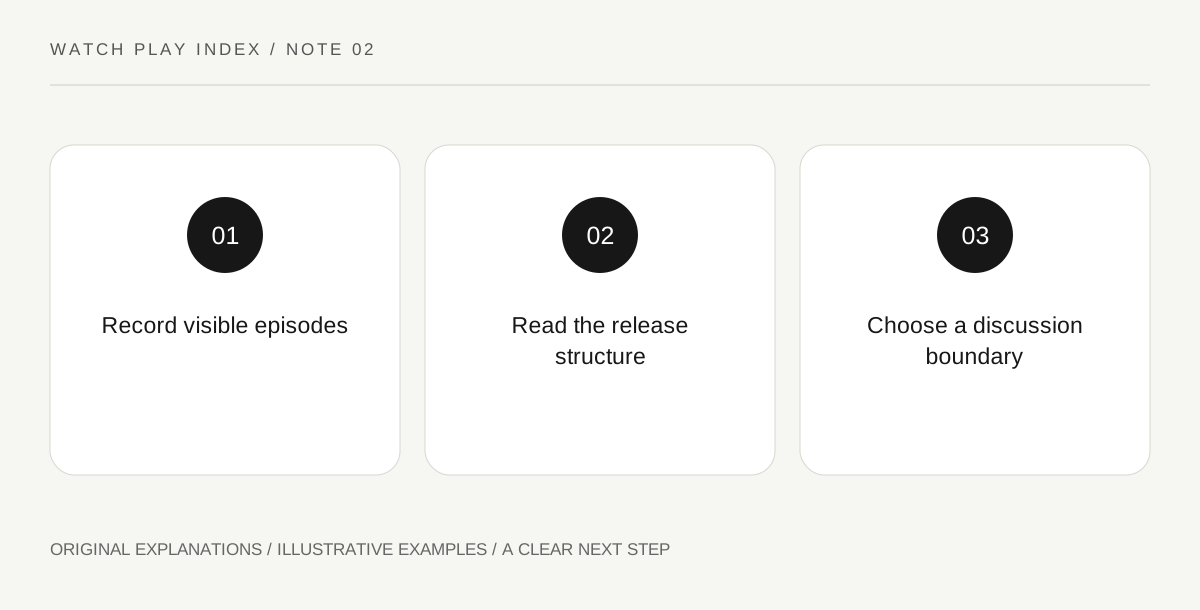
Original explanatory diagram. Read the full method and limitations below.
Write what is actually visible
Record the series, season and episode numbers available on the account you are using. Keep that observation separate from what an article says the full season will eventually contain. Netflix describes staggered releases, grouped episodes and seasons split into parts, as well as licensed shows tied to an original broadcaster. A list that is shorter than the announced eventual total is therefore a question to investigate, not immediate evidence of a broken catalog.
Identify the release pattern
Find the official schedule for the exact season rather than borrowing the pattern used by an earlier one. A weekly schedule has a different viewing rhythm from two large parts, even if the total episode count is the same. Note whether the announcement refers to the first release, a later part or the complete season. These labels help you avoid presenting the first batch’s date as the date when every episode should become available.
Separate a scheduled pause from a new delay
A licensed weekly show may follow the original broadcast schedule, which can include weeks without a new episode. Read the current source announcement before calling a pause unexpected. Do not infer an episode’s content, cancellation or production problem from an empty calendar slot. Your note can simply state the next confirmed release and leave the reason unassigned when the official source does not explain it. Information is still useful when it honestly preserves an unknown.
Choose a viewing rhythm deliberately
Some viewers enjoy discussing a batch as it arrives; others prefer waiting until a season or part is complete. Decide which experience the group wants and set a spoiler boundary accordingly. A slower viewer should not have to treat every discussion as a race. Put the last shared episode number in the group note and update it when everyone agrees. The release schedule describes availability, while the discussion schedule describes the group’s own pace.
An illustrative reader exercise
Imagine a fictional eight-episode season advertised in two parts. An account shows the first four, and friends initially describe the other four as missing. After reading the official part labels, they change their note to say that only the first part is available in this scenario. They schedule discussion through episode four and wait for confirmation of the next part. The numbers are illustrative, not a real show listing.
Questions that come up
Does one season’s release pattern apply to the next?
No. Check the actual announcement for the season you plan to watch. Earlier patterns can suggest a question, but they cannot establish a later schedule or explain an absent episode by themselves.
Does a pause prove that a series is cancelled?
No. A gap can have several explanations, including the announced release structure. Use a current official statement for cancellation or renewal news and keep unsupported conclusions out of the schedule note.
References and scope
These sources support the factual background. Examples and exercises are original illustrative teaching material. References do not imply endorsement.
- Netflix Help — missing episodes — Weekly, grouped and split-season release arrangements.